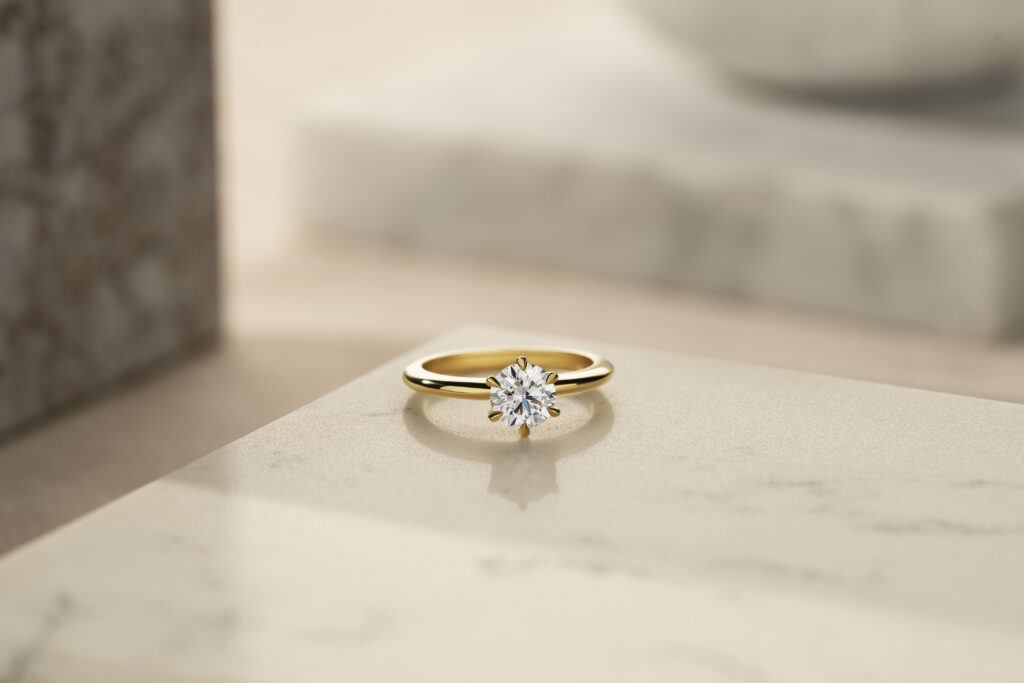
Take a peek behind the scenes at Diamondport and get to know our jewellers Karis and Harry.
At Diamondport, every piece of jewellery is made with intention, precision, and care. Behind the scenes, our head jeweller Karis, and her protege Harry make magic happen through careful planning and pure talent.
In this interview, we talk about their journey into jewellery making, what truly defines quality craftsmanship, and what clients should know when designing, buying, and caring for fine jewellery from Diamondport Jewellers in Brisbane. Whether you’re considering a custom engagement ring or simply want to understand what sets high-quality jewellery apart, this conversation offers an honest look inside the Diamondport workshop.
How did your journey into jewellery making begin?
Karis: I’ve always been creative and enjoyed working with my hands. Making things, pulling them apart, and understanding how they work has always interested me. Jewellery became the perfect balance of creativity and technical skill — it’s detailed, challenging, and incredibly rewarding.
What started as looking for a hands-on role quickly turned into a career once I realised how meaningful jewellery is to people. Knowing that something you’ve made will mark an important moment in someone’s life gives the work real purpose.
What inspired you to start an apprenticeship in jewellery making?
Harry: I’ve always been drawn to the intricacies and beauty of fine jewellery. I am a precious metal enthusiast, so getting into making fine jewellery seemed like a good choice. Once I started I realised how much I loved it!
What does your role as Head Jeweller at Diamondport involve?
Karis: It’s a very hands-on role that touches every part of the jewellery-making process. I oversee production to ensure each piece is completed on time and meets our very high standards.
This includes quality control at every stage — design reviews, technical drawings, component preparation, assembly, stone setting, and final polish. I also train and mentor Harry; provide technical guidance on new designs, repairs, and remodels for the whole team, and furthermore work closely with them to improve workflow and efficiency in the workshop.
Beyond the bench, I’m involved in researching new tools and technology, maintaining equipment, ordering consumables, and helping the business meet production and financial targets — all without compromising on quality.
What does a typical day in the workshop look like for you?
Harry: My day always starts with prep for the workday ahead. I get to the bench 15-30 minutes early and use that time to organise my bench, clean and oil my tools if need be, and categorise my jobs for the day. This helps me work with efficiency and stay on target even when challenges arise.
What’s been the most challenging skill to learn so far?
Harry: The most challenging skill I’ve learned so far is soldering, particularly precision soldering for the complex and fine settings in many of our designs.
What Sets Diamondport Jewellery Apart
How does Diamondport differ from mass-produced or overseas-made jewellery?
Karis: Nothing we create is mass-produced. Even when a client chooses one of our classic designs, the piece is made to order specifically for them.
Every piece passes through our workshop and is worked on by skilled jewellers at each stage. We don’t outsource critical parts of the process, and we never sacrifice quality for speed or cost — the focus is always on creating jewellery that will last a lifetime.
What does quality craftsmanship mean to you?
Karis: Quite simply, it’s a piece I’m proud of. If I’m happy to put my name to it and see it worn every day, then I know it’s been made properly.
What have you learned about quality and attention to detail?
Harry: I have learned to adhere to a level of attention to detail that I previously have never considered. The importance of emery graduation is a good example; it is essential to ensure you don’t skip any grit levels in order to achieve a clean and uniform polish.
Learning the Craft of Fine Jewellery
What skills are you currently learning as an apprentice jeweller?
Harry: The biggest thing I am learning are the skills and techniques involved in setting as I will specialise in this; paramount is patience!
Diamonds, Gemstones, and Metals
What’s it like working with diamonds and precious gemstones for the first time?
Harry: I have learned to be very careful and deliberate with my movements depending on the type of stone I’m working with, for instance; diamonds are a blessing to work with due to their extreme hardiness and heat resistance. Other stones are not so forgiving though and a wrong move may damage the stone.
How do you select diamonds and gemstones for Diamondport pieces?
Karis: We work closely with trusted, high-quality diamond and gemstone suppliers who meet our standards for consistency and ethics.
Beyond grading reports, we look closely at proportions, ratios, and overall spread — how the stone actually looks once it’s set is the most important thing. A diamond or gemstone needs to perform visually in real life, not just read well on paper. All of our staff are very knowledgeable and skilled in selecting the best diamond in your preferred price frame- don’t leave it up to chance with an online purchase.
What should clients consider when choosing metal for their jewellery?
Karis: 18ct gold is my top recommendation. It offers the best balance of durability, richness of colour, and longevity, making it ideal for fine jewellery that’s designed to last a lifetime.
Custom Jewellery: What Clients Should Know
What questions should clients ask when commissioning a custom engagement ring?
Karis: Anything at all. There are no silly questions when it comes to custom jewellery.
Whether it’s about diamond size, setting styles, durability, or budget, asking questions helps ensure the final piece feels right. A custom engagement ring should be an enjoyable, collaborative process — not an overwhelming one.
What do you enjoy most about being involved in custom-made pieces? What part of the process excites you the most?
Harry: For me, I most enjoy the satisfaction of seeing a beautiful custom piece turn from a rough structure, maybe even only a sketch on a piece of paper, into a dazzling piece of art. Despite my love for seeing a finished piece, I actually most enjoy the initial cleanup and getting pieces ready for soldering and setting- this is where the most change is seen.
How involved are clients in the design process?
Karis: It really varies. Some clients are very relaxed and trust us completely, while others love being deeply involved in every detail. Both approaches are great — our job is to guide the process and adapt to what each client feels comfortable with.
Caring for Fine Jewellery
What advice do you give clients to help their jewellery last a lifetime?
Karis: Regular care makes a huge difference. An annual check-up or service helps catch any issues early, and I always recommend taking jewellery off occasionally — especially during activities that could cause unnecessary wear like at the gym or housework.
Buying Fine Jewellery with Confidence
What’s one detail people often overlook when choosing a ring?
Karis: How it will sit alongside a wedding band and how it looks from the side. These details have a big impact on how a ring feels and looks long-term, but they’re often overlooked in the early stages.
A Personal Perspective
What’s the most rewarding part of creating custom jewellery?
Karis: Seeing an idea turn into a finished piece is always satisfying — especially once it’s polished, set, and catching the light.
There’s also something special about the symbolism behind custom jewellery. Knowing a piece represents a relationship, a milestone, or a personal story makes the process even more rewarding.
What skills are you most excited to continue developing? Why do you think traditional jewellery training still matters today?
Harry: I am most excited to develop my setting skills. I feel that a precise setting really brings a piece together, and I am looking forward to setting stones that really blow the clients away.
Classical jewellery training is exceptionally important not only to pay respect to the rich history behind jewellery manufacturing, but also for individuals to discover if they truly love the work and have what it takes.
Where do you see your career in jewellery heading?
Harry: I see myself putting in the hard yards, not only for the sake of developing my skills, but also to make the people who gave me a chance proud.
What makes you proud to be part of Diamondport?
Karis: Our standards. At Diamondport we create high-quality jewellery without compromise, and I genuinely believe Diamondport is the best jeweller in Brisbane. Being part of a team that shares that commitment to excellence is something I’m very proud of.
A huge thank you to both of our jewellers who took the time to answer these questions this month (we know they’d rather be playing with gold and diamonds!). We look forward to bringing you more insights into the team that is Diamondport.