
- Engagement Rings
-
-
Browse by type
Browse by Cut
By Metal
Browse by Gemstone
-
-
- Custom
- Diamonds
- Wedding Rings
- Fine Jewellery
- Services
- Learn
- About Us
- Contact
Browse by type
Browse by Cut
By Metal
Browse by Gemstone

Planning to buy a 1 carat diamond?
You might be surprised by how much the price can vary. A 1 carat diamond can cost anywhere from a few thousand dollars to well into five figures, depending on whether you choose a natural or lab-grown diamond and, importantly, the quality of the stone itself.
For anyone buying an engagement ring, understanding what you’re actually paying for is far more useful than simply looking at the carat weight. Two 1 carat diamonds can look remarkably different and have dramatically different prices.
So, how much should you expect to spend on a 1 carat diamond in Australia in 2026? And where should you put your budget if you want the most beautiful diamond for your money?
Let’s break it down.

First things first: carat refers to weight, not size.
One carat equals 200 milligrams. A 1-carat round brilliant diamond will typically measure around 6.5mm across, although the exact measurements vary depending on the diamond’s proportions and cut.
This is important because a higher carat weight doesn’t automatically mean a diamond will look bigger on the finger.
The diamond’s shape, cut and proportions all influence how large it appears.
For example, oval, pear and marquise diamonds tend to have a larger face-up appearance than a round diamond of the same carat weight because more of their weight is distributed across the surface.
A well-cut 1 carat diamond can have plenty of presence on the finger, particularly when paired with the right setting.
A halo can make the overall ring appear larger, while a solitaire allows the centre diamond to take all the attention.
Three-stone settings can also create a more substantial look by adding diamonds alongside the centre stone.
Ultimately, how a 1 carat diamond looks is about more than the number on the certificate.
There isn’t one set price for a 1 carat diamond.
In 2026, the Australian market shows a significant difference between natural and lab-grown diamonds.
Current market data puts the average listed price of a 1 carat lab-grown diamond at several hundred dollars at the loose-stone market level, while comparable natural diamonds are generally several thousand dollars or more.
Prices can vary considerably depending on the exact specifications and where the diamond is purchased.
That doesn’t mean every 1 carat diamond will fall into those figures.
A high-quality diamond with a desirable shape, excellent cut, strong colour and high clarity can cost considerably more.
At Diamondport, the average cost of a 1-carat lab-grown diamond is around $1,250, while a 1-carat natural diamond typically starts from $4,000+.
Prices fluctuate and vary according to cut, colour, clarity, shape, certification and supplier.
Market data should be treated as a guide rather than a fixed retail price.
The important takeaway? Carat weight alone doesn’t determine the price.

One of the biggest changes in the diamond market in recent years has been the rise of lab-grown diamonds.
Lab-grown diamonds are real diamonds with the same fundamental chemical and physical properties as natural diamonds. The difference is their origin: natural diamonds form underground over extremely long periods, while lab-grown diamonds are created using advanced technology in a controlled environment.
In 2026, lab-grown diamonds are significantly less expensive than comparable natural diamonds. Current Australian pricing data shows discounts of more than 75% at some carat weights, although the exact difference depends on the stone’s specifications.
This has opened up more options for couples who want a larger diamond or higher colour and clarity specifications without increasing their overall engagement ring budget.
There isn’t a universally better option.
Natural diamonds appeal to couples who value their geological origin, rarity and traditional symbolism.
Lab-grown diamonds appeal to couples who want the look and physical properties of a diamond while allocating more of their budget towards size, specifications or the overall ring design.
At Diamondport, the right choice comes down to what matters most to you.

If you’ve started looking at diamonds, you’ve probably heard of the 4Cs: Cut, Colour, Clarity and Carat.
Understanding these four factors is one of the best ways to make sure you’re spending your money wisely.
Cut is often the first thing we recommend paying attention to.
It determines how effectively a diamond interacts with light, influencing its brilliance, fire and sparkle.
A beautifully cut 1 carat diamond can look considerably more impressive than a poorly cut diamond of the same weight.
If you’re working with a budget, we’d generally rather see you choose a slightly smaller diamond with an excellent cut than sacrifice cut quality simply to reach a particular carat weight.
At Diamondport, we only offer excellent cut diamonds.
Diamond colour is graded from D to Z, with D being the highest colour grade.
While D-F diamonds are considered colourless, many G-H diamonds can appear white to the naked eye while costing less.
For couples looking for value, G-H can be an excellent place to start, particularly when the diamond is well cut.
The metal you choose also matters. A little warmth can be more noticeable in white gold or platinum than in yellow gold, where a warmer diamond can complement the setting beautifully.

Clarity refers to inclusions and blemishes within a diamond.
Flawless and internally flawless diamonds sit at the top of the clarity scale, but that doesn’t necessarily mean they’re the best choice for your budget.
What matters most is whether a diamond is eye-clean, meaning you can’t see obvious inclusions without magnification.
VS1, VS2 and some SI1 diamonds can offer excellent visual quality without the premium attached to flawless or VVS grades.
Carat is the easiest of the 4Cs to understand because it’s simply the diamond’s weight.
But don’t become too focused on hitting exactly 1.00ct.
Diamonds are often priced around popular weight milestones, so choosing a stone just below one of these numbers can sometimes provide better value.
For example, a 0.90ct diamond can look very similar to a 1.00ct diamond when viewed on the finger, while potentially costing less.
The exact saving will depend on the diamond, however, so it’s worth comparing the stones side by side rather than relying on carat weight alone.
At Diamondport, we believe choosing a diamond should be an enjoyable and stress-free experience. That’s why we give you the opportunity to view your diamonds in person and compare different sizes side by side to find the perfect fit for you. You’ll also have a magnifying loupe to inspect the diamond up close and make your decision with confidence. Our team is here to make the entire diamond-buying process simple, transparent and easy. Book Now!

If you’re trying to maximise your budget, start with cut.
From there, consider whether you really need the highest colour and clarity grades.
A practical starting point could be:
Excellent cut + G-H colour + VS clarity + 1ct
This combination can provide an impressive balance of sparkle, appearance and value.
However, don’t treat this as a formula. The best diamond is the one that looks beautiful to you.
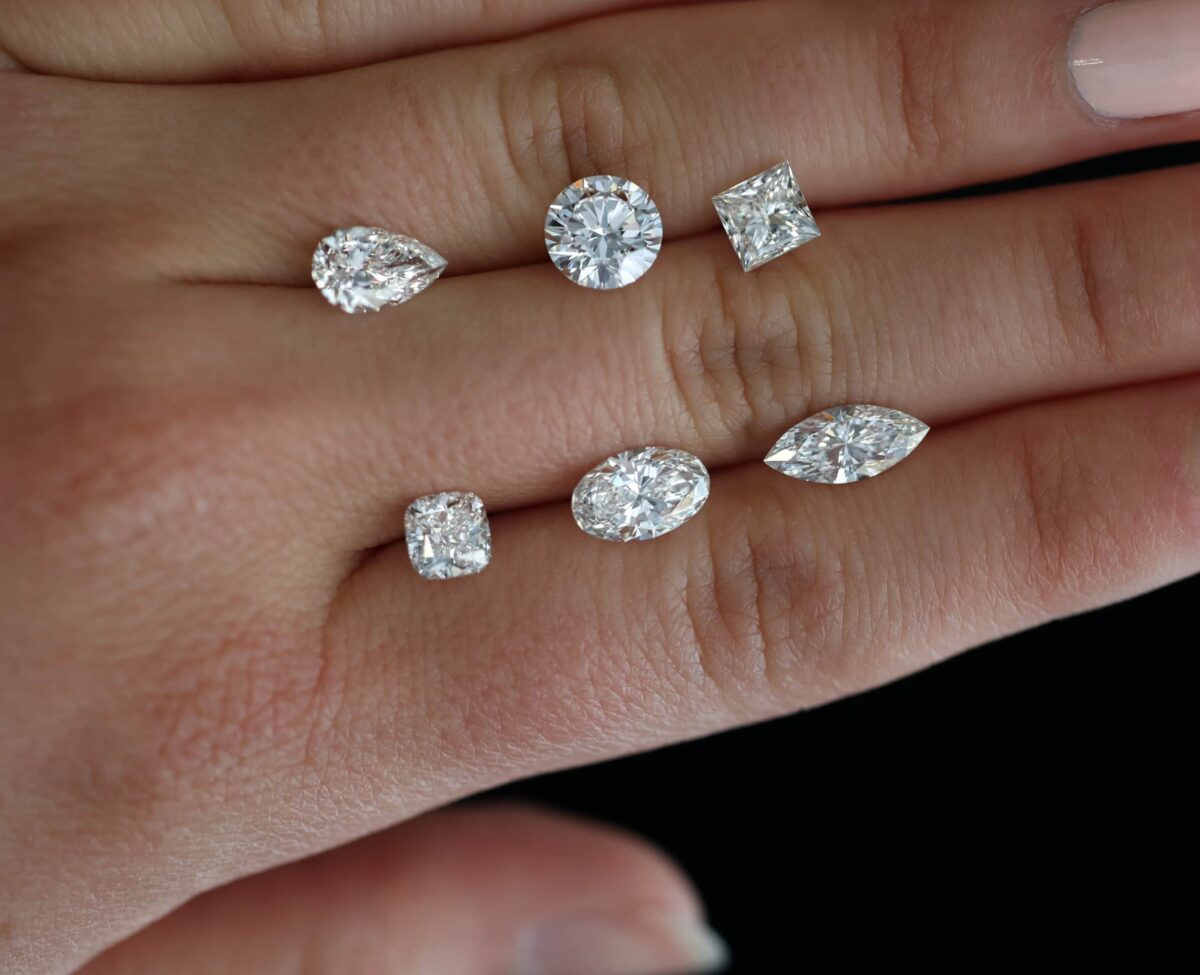
The shape you choose can have a surprisingly big impact on how large your diamond appears.
Round: Classic and highly brilliant, usually carries a premium.
Oval: Elongated and visually larger, excellent visual spread.
Pear: Elegant and distinctive, often offers good visual impact.
Cushion: Soft, romantic appearance, can offer good value.
Emerald: Sleek and sophisticated, focuses on clarity and step-cut beauty.
Radiant: Brilliant with an elongated shape, strong balance of size and sparkle.
Round brilliant diamonds remain one of the most popular choices, but elongated shapes such as oval and marquise can create impressive finger coverage without necessarily increasing the carat weight.

A diamond certificate provides an independent assessment of the stone’s characteristics, including its carat weight, colour, clarity and cut where applicable.
GIA and IGI are two well-known laboratories, with IGI particularly common in the lab-grown diamond market.
When comparing diamonds, always look beyond the certificate number and understand exactly what you’re buying. Two diamonds with seemingly similar specifications can still perform differently because of their proportions, cut quality and individual characteristics.
When you purchase an engagement ring from Diamondport, your diamond will come with an official GIA or IGI certification, giving you confidence in its quality, authenticity and specifications.
Choosing a diamond can feel overwhelming, particularly when you’re comparing dozens of specifications that all seem important.
At Diamondport, our Brisbane team takes the time to explain your options without the pressure of simply selling you the biggest or most expensive stone.
Whether you’re considering a natural or lab-grown diamond, we’ll help you understand the 4Cs, compare diamonds in person and find the balance between beauty, quality and budget that works for you.
Our engagement rings are designed and handcrafted in Brisbane using premium materials, with a focus on creating pieces that can become future heirlooms.
From your first consultation through to your proposal and beyond, our team is here to help make the process straightforward.